.png)
Understanding the Distinct Roles of the Left and Right Hemispheres of the Human Brain
- E. Patsy Greenland

- Sep 3, 2025
- 3 min read
The human brain is an extraordinary organ, designed to oversee countless functions that shape our daily lives. One of the most intriguing features of the brain is its division into two symmetrical hemispheres: the left and the right. Each hemisphere has a distinct role in managing various bodily functions, cognitive abilities, and emotional responses. This article explores the unique contributions of the left and right hemispheres, illustrating how they collaborate to deliver a seamless experience of thought, movement, and emotion.
The Structure of the Brain
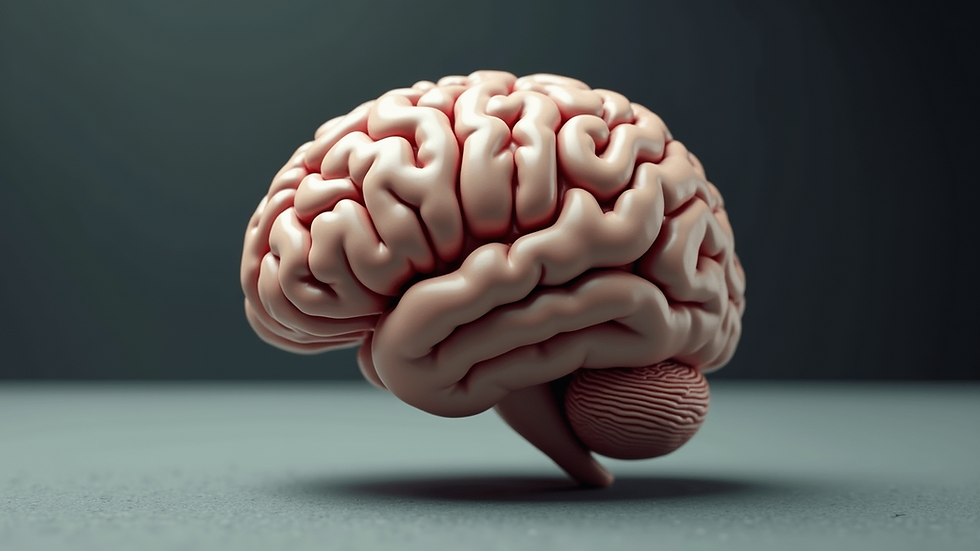
The human brain is divided into two hemispheres, each taking charge of different functions. The left hemisphere is often linked to logical reasoning, analytical thinking, and language skills. In contrast, the right hemisphere deals with creativity, intuition, and spatial awareness. This division empowers the brain to process information more efficiently. This efficiency is crucial; for instance, studies show that tasks requiring both hemispheres working together can improve problem-solving abilities by up to 50%.
The Left Hemisphere: The Logical Thinker
The left hemisphere of the brain is commonly called the "logical" side. It is vital for tasks that involve language, mathematics, and analytical thought. This hemisphere controls the muscles on the right side of the body and processes sensory information from that side as well.
Individuals who primarily use their left hemisphere often excel in occupations that require critical thinking. For example, 70% of successful engineers report using logical analysis as a primary skill in their work. Professions in law and finance tend to attract those who favor left-brain activities, thanks to this hemisphere's focus on details and structured reasoning.
Moreover, the left hemisphere is crucial for speech production and comprehension. Broca's area, found in the left frontal lobe, is instrumental in processing language. Individuals with strong left-hemisphere function can articulate their thoughts clearly, enhancing their communication and social interactions. Given that effective communication can improve workplace collaboration and relationships, the left hemisphere is undeniably essential for professional success.
The Right Hemisphere: The Creative Visionary
Contrastingly, the right hemisphere is often seen as the "creative" side. It plays a central role in artistic talents, intuition, and holistic thinking. This hemisphere manages the muscles on the left side of the body and processes sensory information from that side.
People leaning towards right-brain thinking are often drawn to creative fields like art, music, and design. In fact, research shows that 80% of successful artists report a strong reliance on right-hemisphere cognitive skills like pattern recognition and visualization. These capabilities enable innovative thinking and problem-solving. The right hemisphere is also key to understanding non-verbal cues, such as body language and facial expressions. For example, individuals who excel in emotional intelligence often demonstrate strong right-hemisphere activity during social interactions.
Additionally, the right hemisphere plays a significant role in emotional processing. It enables people to recognize and react to emotions in themselves and others, fostering connections and empathy essential in relationship-building.
The Interplay Between Hemispheres
While each hemisphere has unique functions, they do not work in isolation. The two hemispheres communicate via a bundle of nerve fibers known as the corpus callosum. This structure integrates information, allowing individuals to combine logical and creative thinking in their everyday lives.
A successful artist illustrates this synergy well. They may rely on their right hemisphere for creative ideas while employing their left hemisphere to outline project plans and budgets. This collaboration allows for a holistic approach to both creative expression and practical execution.
The Impact of Hemispheric Dominance
Understanding the strengths and weaknesses associated with each hemisphere can offer valuable insights. Some people may exhibit dominance in one hemisphere, shaping their learning preferences. For instance, left-brain dominant individuals may thrive in structured environments focused on logic, while those dominant in the right hemisphere often excel in creative settings.
Recognizing one's hemispheric dominance can enhance learning strategies. Left-brain learners benefit from organized notes and step-by-step instructions, while right-brain learners tend to engage more with visual aids and practical activities. By adapting teaching approaches to match individual strengths, educators can improve learning outcomes and promote inclusivity.
Embracing Brain Functionality for a Balanced Life
The division of the human brain into left and right hemispheres highlights its complexity and adaptability. Each hemisphere significantly shapes our thoughts, emotions, and actions. By grasping the distinct functions of the left and right hemispheres, individuals can gain insights into their cognitive processes and improve their learning experiences.
Whether you connect more with the logical side of the left hemisphere or the creative flair of the right, embracing both strengths can lead to a more balanced and fulfilling life. As we continue to explore the fascinating workings of the human brain, we uncover remarkable capabilities that lie within each of us.


Comments