.png)
The Creative Brain and the Missing Compass
- Knowell Knough
- 16 hours ago
- 2 min read
Why artists, writers, musicians, and thinkers often struggle with navigation

By Dr Knowell Knough
There’s a quiet little paradox that shows up again and again in my work.
Many of the people who struggle the most with navigation—finding their way through streets, buildings, and unfamiliar places—are often the same people who excel at creativity. Artists. Writers. Musicians. Designers. Dreamers. Thinkers.
If you’ve ever felt embarrassed because you can write a beautiful essay, compose music, design a stunning room, or imagine entire worlds…even if you’re a world class athlete, but still get turned around in a parking garage, take heart.
Your brain may not be broken.
It may simply be wired for a different kind of brilliance.
Let’s talk about why.

The Brain Has More Than One Way to Understand Space
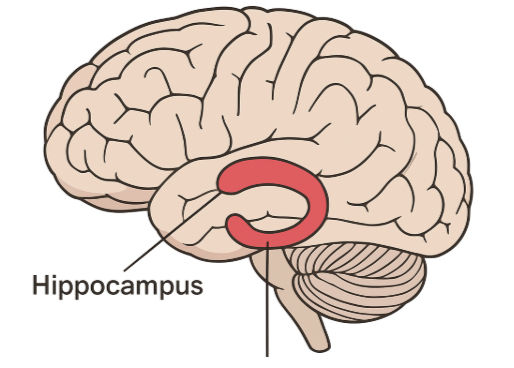
Navigation is usually associated with a part of the brain called the hippocampus, which helps build internal maps of places and routes. People who are naturally strong navigators often rely on mental grid systems—imagining streets and landmarks as parts of a structured map.
But creative thinkers often rely on a different mental strategy.
Instead of building rigid maps, they tend to process the world through:
Stories
Associations
Images
Emotions
Sensory impressions
Rather than remembering, “Turn north at Maple Street,” a creative mind might remember:
“The café with the red awning.”
“The corner that smells like fresh bread.”
“The mural with the bright blue bird.”

This style of thinking is vivid and imaginative—but it can render traditional navigation advice useless.
When someone says “Just follow the map,” a creative brain may silently reply:
“But the map isn’t how I experience the world.”
The “Narrative Navigator”
Many creative individuals navigate through what I call narrative navigation.
Instead of a map, they build a story:
“I walked past the bookstore, then turned near the bakery, then crossed the street where the old fountain is.”
Stories are memorable. They are meaningful. They stick.
But if one piece of the story disappears—a shop closes, a building changes color, a landmark vanishes—the entire mental pathway can collapse.
Suddenly the story no longer makes sense.
And neither does the route.
When Creativity Becomes an Advantage
The good news is that creative thinkers can actually become excellent navigators once they learn strategies that match their thinking style.
For example:
Visual anchors: noticing colors, shapes, murals, and landmarks
Story routes: turning directions into memorable sequences
Sensory markers: remembering smells, sounds, or textures
Sketch maps: quickly drawing a path instead of memorizing instructions
These approaches transform navigation from a rigid puzzle into a creative exercise.
And when that happens, something wonderful occurs.
The same imagination that once made navigation difficult becomes the tool that makes it easier.
A Gentle Encouragement
If you are someone who gets lost easily but finds joy in creativity, please remember this:
The world needs people who can imagine things that do not yet exist.
Your ability to think differently—visually, emotionally, creatively—is not a flaw.
It’s a gift.
Sometimes the same brain that can compose music, write stories, paint beauty, or solve complex ideas simply needs a different compass.
And that compass may not point north.
It may point toward curiosity.


Comments