.png)
The Absent-Minded Professor: Brilliant, but Perpetually Lost
- E. Patsy Greenland

- Nov 6, 2025
- 3 min read
We’ve all met one — or maybe we are one.
The brilliant thinker who can solve complex problems, recall obscure facts, and quote philosophers or physics formulas from memory… yet somehow forgets where the car is parked.
They can explain quantum mechanics but can’t find their way out of a parking garage. They can write an academic paper on navigation systems — but still get lost walking to the lecture hall.
Meet the absent-minded professor: a walking paradox of genius and confusion.
It might seem strange that someone capable of deep intellectual work can’t navigate a simple route. But the truth is, brilliance in one area often comes at the cost of focus in another.
The absent-minded professor’s brain is busy.
It’s constantly spinning with ideas, theories, questions, and creative connections. In fact, research shows that people who engage in high-level abstract thinking often have less mental bandwidth for spatial and situational awareness.
When their mind is occupied with the mysteries of the universe, the location of the parking lot simply doesn’t make the cut.
It’s not that they can’t pay attention — it’s that their brain is already full of galaxies.
Why They Get Lost So Easily
There can be several explanations for the strange behavior of absent-minded professors, and science backs them up.
Overactive Cognitive Load
Their mental energy is spent analyzing, inventing, or solving — not remembering which way they turned after the café. When they’re deep in thought, routine navigation becomes background noise.
Poor Spatial Encoding
Some people’s brains simply don’t record landmarks or directions as clearly as others. They may be incapable of creating the mental maps that inform them of where they’ve been relative to where they need to go
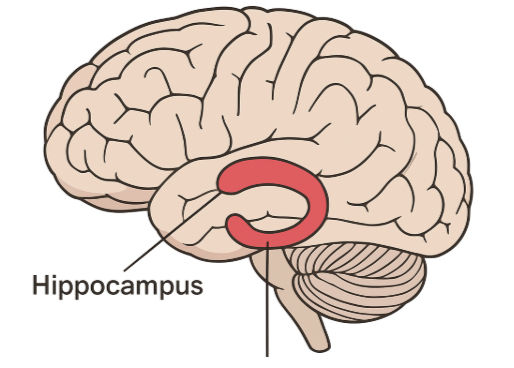
It’s not intelligence — it’s wiring. The hippocampus (the brain’s navigation center) doesn’t store “turn left at the red tree” as efficiently.
Low Situational Awareness
A mind absorbed in internal thoughts tends to tune out external cues.
So while the average person notices the “Gate B” sign, the absent-minded professor is thinking, “I wonder if birds ever get confused about magnetic north…”
Routine Reliance
They thrive on habit — same office, same commute, same coffee shop. When a routine changes (say, a new route to the airport), their mental GPS simply sputters.
The Daily Struggles of the Intellectually Gifted (and Geographically Cursed)
The absent-minded professor’s life is a series of unintended detours. They head to the post office and somehow end up at the library. They park on “Level 2B,” then wander “2A” for twenty minutes before realizing there’s a difference. They might even forget which city they’re in — not because they don’t care, but because their brain is still solving Tuesday’s equations.
Friends and family often find it endearing — or occasionally exasperating.
“Didn’t you say you’ve been to this airport ten times?”
“Yes,” they reply, “but it looks different every time!” It’s true! If they experience visual reorientation illusion (VRI)₁ the place will definitely look different each time!
The Hidden Beauty of Getting Lost
But here’s a secret: being directionally challenged isn’t necessarily a flaw. It’s certainly not a “disability.”
It’s often a side effect of having a mind that lives in the clouds — one that’s more curious than cautious, more visionary than vigilant. The absent-minded professor may miss a few turns, but they often discover things the rest of us overlook — a quiet garden, a new café, a shortcut nobody knew existed, a formula for making our lives much easier.
Their detours are part of their genius. They think differently, explore freely, and prove that intelligence doesn’t always walk in straight lines.
Finding Balance
Still, a little structure never hurts. For the perpetually lost scholar, we say:
Use GPS — always. Even if it’s a 5-minute walk.
Take photos of where you park.
Repeat routes aloud. “Left at the fountain, right at the bookstore.” (Find a formula for determining left and right, if that’s a challenge too.)
Slow down and observe. Ground yourself before the mind floats away again.
These small steps can turn wandering into intentional exploration.
The absent-minded professor reminds us that intelligence wears many faces. Some minds conquer equations. Others conquer directions. Some do neither. Few do both.
So, the next time you see someone brilliant wandering the wrong way down an airport corridor, or looking lost at the mall, — smiling vaguely, staring at their phone, muttering about “terminal geometry” — don’t laugh too hard.
They might not know where they are……but they probably know exactly where the rest of the universe is headed.
₁ I’ll explain this term, later.


Comments